
Solar Energy Gains Ground as Costs Fall and Demand Rises Worldwide
Solar energy is moving from a fast-growing alternative power source to a central part of electricity planning in many countries, as lower equipment costs, government incentives and rising demand for clean power accelerate investment across the sector.
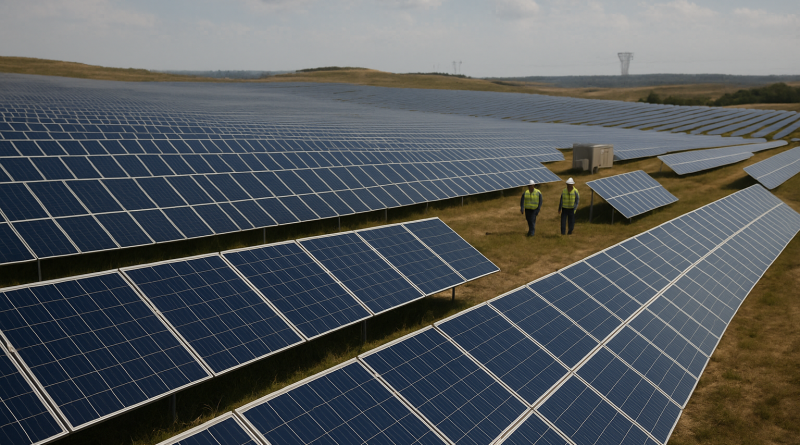
The expansion has been especially visible over the past two years. According to the International Energy Agency, solar photovoltaic capacity additions reached record levels in 2023, led by large-scale utility projects and a rapid increase in rooftop systems. Growth has continued as developers, businesses and households seek protection from volatile fossil fuel prices while governments work to meet climate and energy security goals.
A key driver has been the sharp decline in the cost of solar panels. Global manufacturing capacity, particularly in China, has expanded quickly, pushing module prices down and making projects more competitive with coal and natural gas in many markets. In sunny regions, new solar farms can now be among the cheapest sources of electricity, even before subsidies are considered.
The United States has seen increased investment following the Inflation Reduction Act, which created long-term tax credits for renewable energy projects and domestic manufacturing. Several states, including Texas, California, Florida and Arizona, have added significant solar capacity as utilities look to diversify their power mix. Texas, long associated with oil and gas, has become one of the country’s leading solar markets because of abundant land, strong sunlight and rising electricity demand.
In Europe, solar growth has been shaped by the effort to reduce dependence on imported natural gas after Russia’s invasion of Ukraine disrupted energy markets. Germany, Spain, the Netherlands and Poland have all expanded solar installations, supported by policy incentives and public demand for lower energy bills. The European Union has also promoted rooftop solar and faster permitting as part of its broader energy transition strategy.
Emerging economies are also turning to solar as a way to expand electricity access and reduce fuel import costs. India has set ambitious renewable energy targets and continues to build large solar parks, while countries in Africa, Latin America and Southeast Asia are using solar mini-grids and off-grid systems to serve communities that are not reliably connected to national power networks.
Despite the momentum, the solar industry faces several challenges. One of the biggest is grid capacity. In some regions, solar projects are being delayed because transmission lines are not available to move electricity from sunny rural areas to population centers. Grid operators are also managing the variability of solar generation, which rises during daylight hours and falls quickly in the evening.
Energy storage is becoming increasingly important in addressing that challenge. Battery systems can store excess solar power during the day and release it when demand peaks, improving reliability and reducing the need for backup fossil fuel plants. Falling battery costs have encouraged utilities and private developers to pair solar farms with storage, creating projects that can provide power for longer periods.
Supply chains remain another concern. While lower panel prices benefit consumers and developers, the concentration of solar manufacturing in a few countries has raised questions about trade, labor standards and long-term resilience. The United States, India and the European Union have all introduced policies intended to encourage domestic production of solar components, though building competitive manufacturing capacity can take years.
The environmental footprint of solar technology is also drawing more attention as the industry matures. Solar panels produce electricity without direct greenhouse gas emissions, but mining, manufacturing and transportation all carry environmental costs. Recycling older panels and recovering valuable materials such as glass, aluminum and silicon are expected to become more important as early installations reach the end of their operating lives.
For consumers, rooftop solar remains attractive where electricity prices are high and policies allow homeowners to sell excess power back to the grid. However, changes to net metering rules in some areas have altered the economics of home solar, encouraging more customers to add batteries or adjust energy use to maximize savings.
Analysts say solar energy is likely to keep expanding, but its long-term impact will depend on more than panel installations alone. Investments in transmission, storage, permitting reform and workforce training will be needed to integrate higher levels of renewable power into modern electricity systems.
As countries balance economic growth, energy security and climate commitments, solar power has become a practical option rather than a niche technology. Its rapid rise is reshaping electricity markets and forcing governments and utilities to rethink how power is generated, stored and delivered.